Small undersea volcanoes may unleash outsized tsunamis
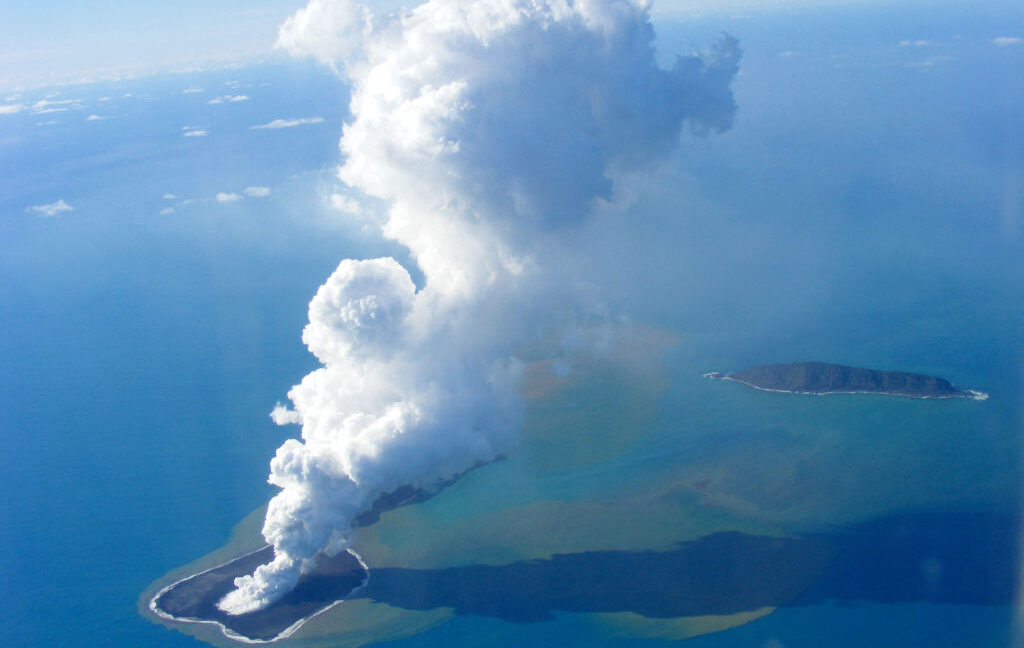
Post-eruption imaging of the Hunga caldera gives new details of its collapse.
The discovery that small undersea volcanoes can trigger outsized tsunamis has significant implications for the field of natural disaster prediction and mitigation. The recent study on the Hunga caldera, which collapsed after an eruption in 2022, provides new insights into the dynamics of such events. By analyzing post-eruption imaging data, researchers were able to gather detailed information on the caldera's collapse, shedding light on the complex processes involved.
This finding is particularly relevant for the DNS community, as it highlights the importance of advanced monitoring and modeling capabilities for predicting and responding to natural disasters. The fact that small undersea volcanoes can produce disproportionately large tsunamis underscores the need for continued investment in ocean observation and sensing technologies. As our understanding of these complex systems grows, so too does the potential for more effective early warning systems and disaster response strategies.
As researchers continue to study the Hunga caldera and other similar events, we can expect to see further advances in tsunami prediction and mitigation. Key areas to watch include the development of more sophisticated modeling tools, the integration of AI and machine learning techniques for real-time data analysis, and the deployment of new ocean observation technologies. By staying at the forefront of these advancements, the DNS community can play a critical role in saving lives and reducing the impact of natural disasters.
Originally reported by arstechnica.com. DNSNews adds analysis for ai & agent economy readers.