Meet the winner of Nikon's Small World in Motion video contest
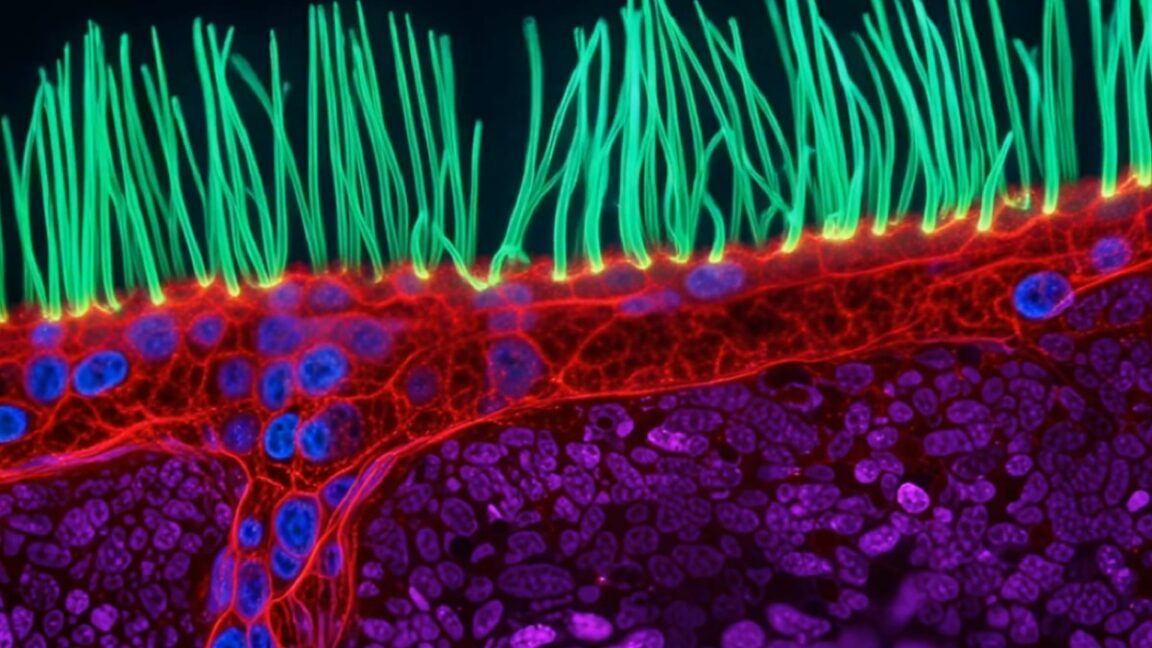
Ning Xu of Tsinghua University captured tiny cilia beating in airways of a child with rare respiratory disorder.
Ning Xu's winning video in Nikon's Small World in Motion contest showcases the intricate movement of cilia in the airways of a child with a rare respiratory disorder. This stunning microscopy footage not only highlights the beauty of cellular motion but also sheds light on the complexities of human disease. By capturing the beating cilia, Xu's video provides a unique glimpse into the inner workings of the human body, giving researchers and medical professionals a valuable tool for understanding and potentially treating such disorders.
The significance of this video lies in its potential to inspire new areas of research and collaboration between scientists, clinicians, and engineers. As our understanding of the intricate relationships between cellular motion, disease, and treatment grows, so too does the importance of interdisciplinary approaches to tackling complex health challenges. The use of advanced microscopy techniques, like those employed by Xu, will likely play a critical role in driving innovation in the life sciences and biomedical engineering.
As we look to the future, it's exciting to consider what emerging technologies and techniques will enable researchers to explore the intricate dance of cellular motion in greater detail. Advances in AI-powered microscopy, machine learning-based image analysis, and other cutting-edge tools will likely continue to push the boundaries of what's possible in the world of cellular imaging. Keep an eye on the development of new microscopy techniques and their applications in disease research – the next breakthroughs in our understanding of human health may be just around the corner.
Originally reported by arstechnica.com. DNSNews adds analysis for ai & agent economy readers.